Choosing the right screws for metal is a key step in construction, repair, and manufacturing. It’s not just about picking the right length or diameter—it’s a complex process that considers material thickness, screw type (metric or inch), pilot hole diameter, and the hardness of the metal.
A hole that is too small may cause cracks or deformation, while one that is too large can result in weak fastening. Self-tapping screws can create threads directly in the metal, but precise calculations are required for the best results.
In this article, we’ll take a closer look at metric and inch screws, selection tables, and practical tips for accurate installation. Following these guidelines will help you avoid mistakes and ensure a strong connection.
Metric Screws: Selection Guidelines

Metric screws, marked with an M followed by a number (e.g., M4 for 4 mm diameter), are commonly used in Europe, Ukraine, and Asia. They are ideal for steel, aluminum, and stainless steel.
For thin sheets (up to 1 mm), use smaller diameters to avoid thread stripping.
For thick materials (over 3 mm), use larger screws since the metal can handle the load.
Pilot hole size is typically 0.5–1 mm smaller than the outer thread diameter, but varies depending on metal hardness.
For softer materials like aluminum (Rm ≈100 N/mm²), use smaller holes. For harder materials like stainless steel (up to 500 N/mm²), use larger holes.
Selection is based on standards DIN 7975 and BS4174.
Example: for an ST 2.9 screw in aluminum 0.45–0.91 mm thick, use a hole of 2.05–2.30 mm.
In steel, use 2.21–2.40 mm.
For self-drilling screws, no pilot hole is required, but maximum drilling thickness is limited (up to 12 mm for steel).
For high-load applications, always test pull-out strength.
Metric Screw Selection Table
| Screw Size | Metal Thickness (mm) | Recommended Hole (mm) | Material (Rm, N/mm²) |
|---|---|---|---|
| M3 (ST 2.9) | 0.5–1.5 | 2.3–2.5 | From 100 (aluminum) |
| M3 (ST 2.9) | 0.45–1.62 | 2.21–2.40 | ~300 (steel) |
| M3 (ST 2.9) | 1.62–2.03 | 2.40–2.60 | Up to 500 (stainless steel) |
| M4 (ST 3.5) | 1.0–2.0 | 3.2–3.4 | From 100 |
| M4 (ST 3.5) | 0.91–1.62 | 2.80–2.95 | ~300 |
| M4 (ST 3.5) | 1.62–2.64 | 3.10–3.20 | Up to 500 |
| M5 (ST 4.2) | 1.5–3.0 | 4.1–4.3 | From 100 |
| M5 (ST 4.2) | 0.91–1.62 | 3.08–3.40 | ~300 |
| M5 (ST 4.2) | 1.62–3.18 | 3.40–3.80 | Up to 500 |
| M6 (ST 4.8) | 2.0–4.0 | 5.0–5.2 | From 100 |
| M6 (ST 4.8) | 0.91–1.62 | 3.59–3.81 | ~300 |
| M6 (ST 4.8) | 1.62–4.75 | 3.81–4.50 | Up to 500 |
| M8 | 3.0–6.0 | 6.8–7.0 | From 100 |
For aluminum, use the lower range values.
For steel, use the higher values.
For harder materials, increase the hole size by 0.1–0.2 mm.
Example: For M5 in 2 mm steel, a 4.1 mm hole ensures optimal fastening.
Inch Screws: Selection Guidelines

Inch screws, marked with numbers (#6, #8) or fractions (1/4”), are common in the US and Canada.
Always check threads per inch (TPI): fine threads for thin metal, coarse threads for thicker material.
Pilot hole should be 0.008–0.015” (0.2–0.4 mm) smaller than the thread diameter.
Example:
For Type A, max hole size for #4 is 0.086” with a #41 drill (0.096”).
Self-drilling screws (Type AB) require no pilot hole for steel thickness up to 0.500” (12.7 mm).
For aluminum, reduce by 20%.
Guidelines:
For thickness <0.064” (1.62 mm), use smaller holes.
For thicker materials, use larger holes.
Test based on hardness: softer metals → smaller holes, harder → larger holes.
Inch Screw Selection Table
| Size (#) | Outer Ø (mm) | Metal Thickness (mm) | Recommended Hole (mm) | TPI | Drill |
|---|---|---|---|---|---|
| #6 | 3.5 | 0.5–1.5 | 3.1–3.2 | 20 | #32 (0.116”) |
| #6 | 3.5 | 0.45–0.91 | 2.35–2.70 | 20 | #32 |
| #8 | 4.2 | 1.0–2.0 | 3.7–3.8 | 18 | #29 (0.136”) |
| #8 | 4.2 | 0.71–0.91 | 2.90–3.00 | 18 | #29 |
| #10 | 4.8 | 1.5–3.0 | 4.3–4.4 | 16 | #21 (0.159”) |
| #10 | 4.8 | 0.71–0.91 | 3.40–3.51 | 16 | #21 |
| 1/4” | 6.35 | 2.0–4.0 | 5.9–6.0 | 14 | #4 (0.209”) |
| 1/4” | 6.35 | 0.044–0.500 | No hole (self-drill) | 14 | – |
| 5/16” | 7.94 | 3.0–6.0 | 7.5–7.6 | 12 | I (0.272”) |
For thickness >1.62 mm, use higher values.
Example: For #10 in 2 mm aluminum, a 4.3 mm hole ensures strong holding.
Drilling and Installation Tips
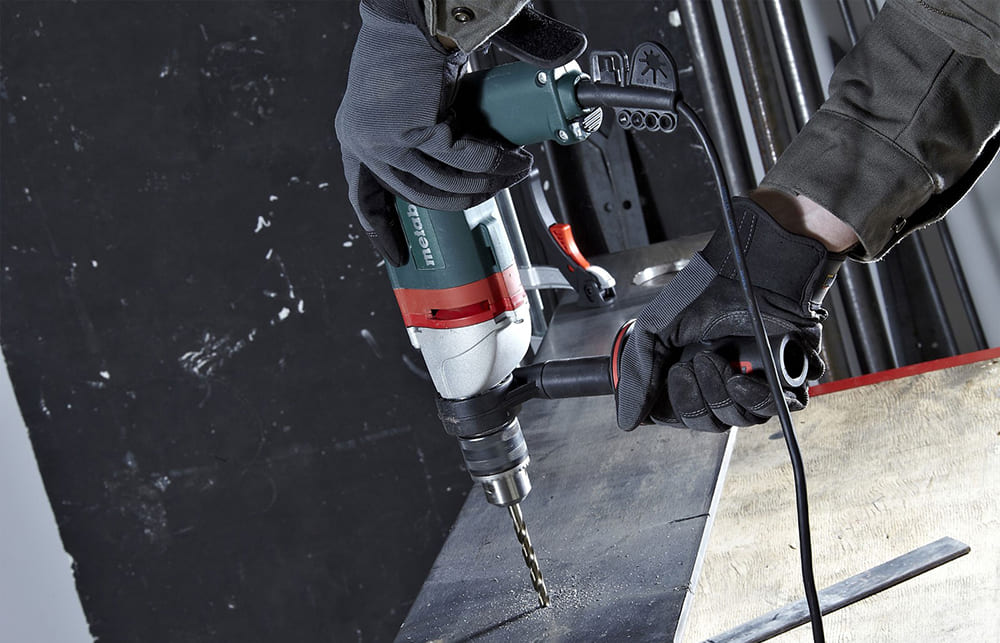
Use a center punch before drilling to prevent drill bit slipping.
Keep the drill bit sharp to avoid ragged edges that weaken the joint.
For thick metal, use lubrication (machine oil) to reduce heat and friction.
Before installation, check: the screw should enter with slight resistance by hand.
For self-drilling screws:
Type A → up to 1.5 mm thickness.
Type B → for thicker material, but pre-drill in hard metals.
Always test on samples, especially for critical structures.
Consider conditions:
Corrosion → use stainless steel screws.
Vibration → use screws with locking features.
Conclusion
Selecting screws for metal is about balancing multiple factors to ensure reliability.
Metric screws are best for precise European standards.
Inch screws suit American projects.
Use the provided tables as a guide, but always consult manufacturers (e.g., SFS, TR Fastenings) and perform tests.
Correct choice of pilot hole and screw type guarantees durability, safety, and efficiency.
Ultimately, every project should start with evaluating material thickness and hardness—the foundation of successful fastening.