Laser cutting has become an essential technology in modern manufacturing, enabling precise and efficient metal processing. Unlike conventional mechanical cutting tools, laser cutting uses a focused beam of light to melt, burn, or vaporize material, leaving clean edges with minimal waste. The combination of speed, accuracy, and adaptability has made laser cutting the method of choice for industries such as automotive, aerospace, electronics, and medical manufacturing.
In this article, we will explore how laser cutting works, analyze the different types of laser systems, and compare the advantages of laser technology to other metalworking methods. By the end of the article, you will not only understand how laser cutting works, but also when it makes sense to choose it over alternatives such as plasma, waterjet or mechanical cutting.
The Working Principle of Laser Cutting
What Makes a Laser Unique?
The term “laser” stands for Light Amplification by Stimulated Emission of Radiation. In laser cutting, a highly concentrated beam of light is generated, creating heat that can melt, burn, or vaporize material. This process is highly controlled, making it possible to cut through metal without physical contact, reducing wear and ensuring consistency.

Laser cutters rely on CNC (Computer Numerical Control) technology, which guides the laser head along the exact cutting path designed in CAD software. This high degree of automation ensures repeatability, even for complex designs, and allows manufacturers to produce intricate shapes with ease.
How the laser cutting process works
The process includes several key steps:
- Beam generation: The laser source generates a focused beam of light. In industrial applications, fiber lasers and CO2 lasers are the most common.
- Focusing the beam: Lenses or mirrors direct the beam to a focal point, achieving extremely high temperatures in a very precise spot on the material.
- Melting and cutting: As the laser moves along the cutting path, it melts or burns the material. Gases such as nitrogen or oxygen are often used to blow away molten metal and ensure a clean cut.
- Controlled Motion: A CNC system controls the movement of the laser head, following the digital design down to the smallest detail.
This process allows the laser cutter to achieve precision in the micron range, which is critical for industries such as aerospace or medical device manufacturing, where tolerances are extremely tight.
Types of laser systems for metal cutting
Depending on the material and the specific requirements of the project, different types of lasers are used.
- CO2 Lasers

- Best for cutting non-metallic materials and thin metals.
- Efficient on materials such as wood, plastics and textiles.
- Commonly used in industries that require engraving and light cutting.
- Fiber Lasers
- Ideal for cutting reflective metals such as aluminum, brass and copper.
- Faster and more energy efficient than CO2 lasers.
- Widely used in industrial applications due to their reliability and minimal maintenance requirements.
- Nd (Neodymium Doped) Lasers
- Used for thicker materials and engraving tasks.
- Generates powerful pulses useful for applications requiring deep cuts.

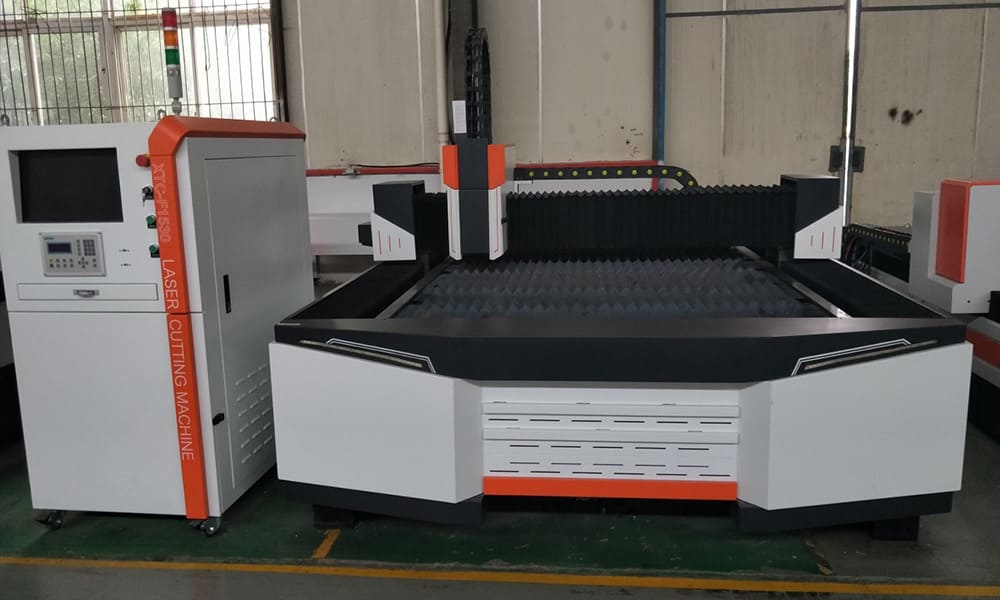
Advantages of laser cutting over other methods
1. Precision and accuracy
Laser cutting offers unparalleled accuracy, with tolerances often as low as ±0.01 mm. This makes it ideal for industries that require precise components, such as electronics and aerospace. Traditional mechanical tools can't achieve this level of precision, especially for complex or intricate designs.
2. Versatility in materials
Laser cutting can process a wide range of metals, from stainless steel to aluminum and titanium. In addition, it can be used on non-metallic materials such as plastics and ceramics, expanding its application beyond metal machining.
3. Clean cuts with minimal waste
The focused laser beam produces smooth edges with little or no burr, reducing the need for additional finishing operations. Unlike mechanical cutting tools, which often produce scrap and require rework, laser cutting minimizes material waste.
4. Speed and efficiency
Laser systems are faster than mechanical cutting tools, especially for thin materials. This efficiency translates into higher productivity and shorter production cycles. For example, a fiber laser can cut through 3 mm steel in seconds, a task that would take much longer with mechanical tools.
5. Non-contact process
Because the laser beam doesn't physically touch the material, there is no wear and tear on cutting tools, which means less downtime for maintenance and lower operating costs. This also prevents the material from being deformed, which is a common problem with mechanical cutting methods.
6. Automation and Integration with CAD/CAM Systems
Today's laser cutters easily integrate with CAD/CAM software, allowing manufacturers to move seamlessly from design to production. This automation reduces human error and ensures consistency across large production runs.
Compare laser cutting with other metal cutting methods
Laser Cutting vs. Plasma Cutting
- Plasma cutting uses an electric arc and gas to create plasma, which melts the metal.
- Advantages of plasma:
- Works well with thick metals (up to 50mm).
- Faster for heavy-duty applications such as shipbuilding and structural steel.
- Disadvantages of plasma:
- Less precise than laser cutting, making it unsuitable for detailed work.
- Produces more heat, which can distort the material.
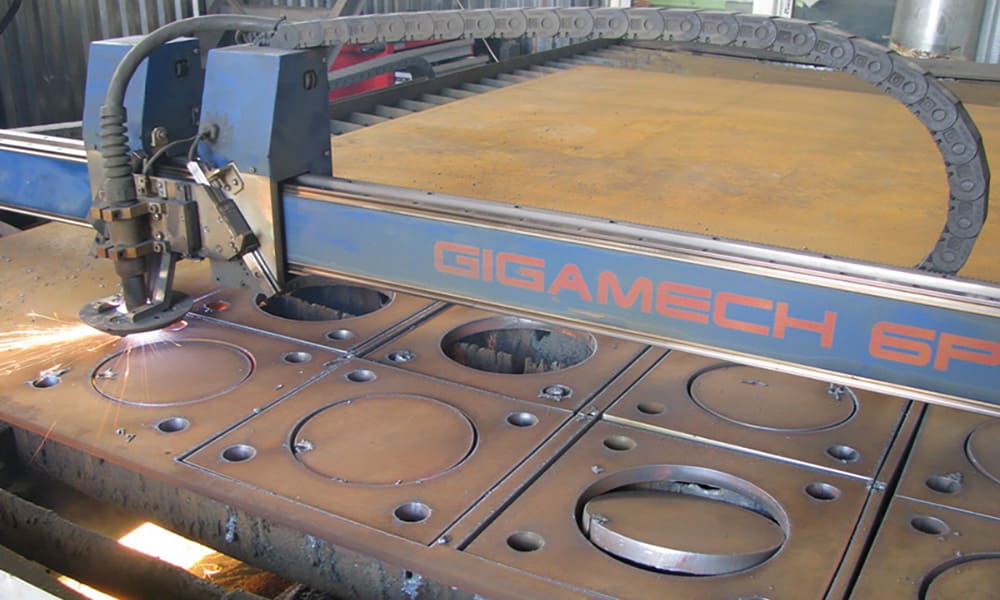
When to Use Laser: For thin metals, high precision and intricate designs.
When to Use Plasma: For thicker materials and applications that do not require fine detail.
Laser Cutting vs. Waterjet Cutting
- Waterjet cutting uses high-pressure water mixed with abrasives to cut through material.
- Advantages of waterjet:
- No heat-affected zone (HAZ), preserving material properties.
- Can cut very thick materials.
- Disadvantages of waterjet:
- Slower than laser cutting and more expensive due to the cost of abrasives.
- Limited for very fine or detailed cuts.

When to Choose Laser:When speed, precision and cost-effectiveness are priorities.
When to Choose Waterjet: For heat-sensitive materials such as composites and ceramics.
Laser cutting applications across industries
Laser cutting technology is widely used in various industries:
- Aerospace: Cutting complex components with high precision.
- Automotive: Producing lightweight metal parts for cars and trucks.
- Medical Devices: Create intricate tools and implants.
- Electronics: Producing enclosures and heat sinks for sensitive equipment.
These applications demonstrate the versatility and reliability of laser technology in demanding industries.
Conclusion
Laser cutting has emerged as a powerful tool in the metalworking industry, offering a combination of speed, precision and versatility that few other methods can match. While plasma and waterjet cutting have their place in specific applications, laser cutting offers the best solution for industries that require high precision and intricate designs.
Advances in fiber laser technology and integration with automated systems are making laser cutting more accessible and efficient. This not only reduces production costs, but also minimizes waste, contributing to sustainable manufacturing practices.
As industries continue to evolve, the demand for accurate, efficient and automated cutting solutions will only increase. For companies looking to improve productivity and maintain high quality, investing in laser cutting technology offers a clear competitive advantage.